Teacup Mini Bernedoodle Puppies: The Complete Guide to Tiny Bernedoodles, Realistic Expectations, and Responsible Ownership
Few puppies generate as much immediate “aww” as a tiny Bernedoodle. With oversized eyes, soft wavy or curly coats, and the charming combination of Bernese Mountain Dog sweetness and Poodle intelligence packed into a small body, these dogs are often marketed under names like Teacup Mini Bernedoodle, Micro Mini, Tiny, Toy, or Petite Bernedoodle. Their compact size makes them appealing for apartments, travel, and people who want a portable companion.
However, the terms used to describe the smallest Bernedoodles are not standardized, and the push for ever-smaller dogs carries important health and ethical considerations. This in-depth guide explains what “Teacup Mini Bernedoodle” usually means, how these puppies differ from standard Mini Bernedoodles, their temperament, care needs, health realities, costs, and how to approach ownership responsibly.
Understanding the Size Labels: Mini, Tiny, Toy, Micro, and Teacup
Bernedoodles are a hybrid of the Bernese Mountain Dog and the Poodle. Size is primarily determined by the Poodle parent (or successive generations of smaller Bernedoodles bred to Toy or small Miniature Poodles).
- Standard Bernedoodle: Typically 50–90+ pounds and 23–29 inches tall.
- Mini Bernedoodle: Generally 25–49 pounds and 18–22 inches at the shoulder.
- Tiny / Toy / Micro Bernedoodle: Usually 10–25 pounds and 12–17 inches tall. These are the dogs most often sold under “teacup,” “micro mini,” or similar labels.
“Teacup” is a marketing term, not an official size category recognized by any major kennel club or consistent registry. Some sellers use it for dogs expected to stay under 15–20 pounds; others apply it more loosely. Extreme claims of adult weights under 10 pounds or dogs that will “fit in a teacup” should raise caution. Breeding for extreme miniaturization often prioritizes size over structural soundness and can increase the risk of health problems.
Responsible breeders of small Bernedoodles typically aim for healthy dogs in the 10–25 pound range through careful selection across generations rather than repeatedly breeding the smallest, most fragile individuals.
Appearance of Teacup Mini / Tiny Bernedoodle Puppies
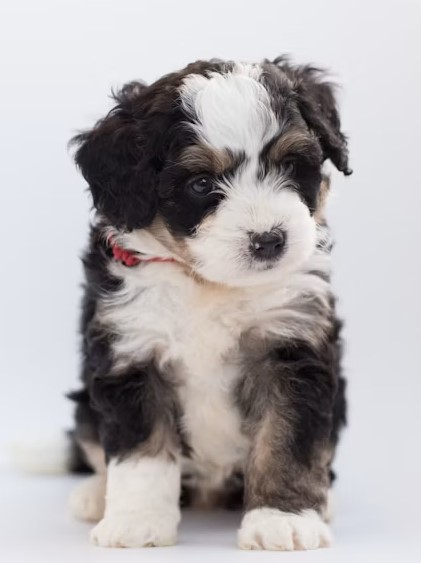
These puppies often look like living teddy bears. They commonly inherit the soft expression and occasional tri-color patterning (black, white, and rust) associated with the Bernese side, combined with the denser, wavy-to-curly coat of the Poodle. Coat colors include tri-color, black-and-white, phantom, solid black, and various parti patterns.
As puppies they are especially petite—often only a few pounds at eight weeks—with large eyes and soft coats that require early grooming habits. Adult size remains small enough for many to be carried comfortably, which contributes to their popularity.
Temperament and Personality
Tiny and Mini Bernedoodles generally share the affectionate, people-oriented nature that makes the larger Bernedoodle so popular. They tend to be:
- Loyal and bonded closely to their families
- Intelligent and usually eager to please
- Playful with moderate energy that comes in bursts
- Good with children and other pets when properly socialized
- Sensitive and sometimes prone to separation anxiety if left alone too much
Smaller Bernedoodles may show slightly higher energy or alertness inherited from Toy Poodle lines compared with calm Standard Bernedoodles. Early socialization and consistent, positive training help channel their intelligence productively.
Care Requirements for Small Bernedoodle Puppies
Grooming
Regardless of size, Bernedoodles with wavy or curly coats need regular maintenance. Brush several times per week (daily is ideal for denser coats) to prevent mats. Professional grooming every 6–8 weeks is typical. Ears require frequent cleaning because of their drop shape, and dental care is especially important in small dogs whose teeth can become crowded.
Exercise
Tiny Bernedoodles usually need 30–45 minutes of daily activity plus mental stimulation. Short walks, play sessions, and puzzle toys suit them well. Avoid forcing high-impact exercise while they are growing. Their small size makes them suitable for apartment living as long as their exercise and enrichment needs are met.
Nutrition and Feeding
Small puppies, especially those on the tiniest end, have higher risks of hypoglycemia (low blood sugar). Frequent, small meals are often necessary in the early months—sometimes every few hours for the smallest individuals. Use a high-quality small-breed or all-life-stages food appropriate for their expected adult size, and monitor body condition carefully. Obesity stresses small joints just as it does larger ones.
Training and Socialization
Start early with positive reinforcement. These intelligent dogs learn quickly but can inherit a stubborn streak. Focus on house-training, basic manners, leash skills, and confidence-building around different people, sounds, and environments. Because they are small, teach children and visitors how to handle them gently to prevent injury.
Health Considerations and the Risks of Extreme Small Size
Bernedoodles can inherit health predispositions from both parent breeds, including hip and elbow concerns, eye conditions, and certain genetic issues. Smaller size often brings a longer potential lifespan (frequently cited in the 14–18 year range for tinies versus 12–15 for standards), which is one genuine advantage.
However, dogs bred to be extremely small face elevated risks common to many toy and teacup-type dogs:
- Hypoglycemia, particularly in young puppies
- Fragile bones and higher fracture risk from jumps or rough handling
- Patellar luxation (kneecap dislocation)
- Dental crowding and periodontal disease
- Tracheal issues in some lines
- Greater vulnerability to injury simply because of their size
Reputable breeders of Tiny or small Mini Bernedoodles perform health testing on parent dogs (hips, elbows, eyes, cardiac, and relevant DNA tests) and avoid selecting solely for the smallest possible size. They also provide realistic adult weight estimates based on the actual parents rather than marketing promises.
Buyers should be wary of any seller guaranteeing extremely low adult weights, offering multiple “teacup” litters year-round, or unable to provide health clearances.
The Cost of Teacup Mini / Tiny Bernedoodle Puppies
Smaller Bernedoodles, especially those marketed as micro, tiny, or teacup, often command higher prices than standard-sized ones—frequently in the $3,000–$6,000+ range from breeders, with some rare colors or extreme sizes priced even higher. Adoption through rescue is far less expensive when available, though pure tiny Bernedoodle puppies are uncommon in shelters.
Ongoing costs include professional grooming, quality food, routine and potential specialty veterinary care, and training. Small dogs can still incur significant medical expenses, particularly if structural or dental issues arise.
Pros and Cons of Teacup Mini / Tiny Bernedoodle Puppies
Pros
- Compact, portable size suitable for many living situations
- Affectionate, intelligent, and usually good family temperament
- Often longer lifespan than larger Bernedoodles
- Lower food costs and easier travel logistics
- Lower shedding potential with proper coat type
Cons
- Higher risk of certain small-dog health issues, especially if bred for extreme size
- Fragile—require careful handling, especially around young children or larger pets
- High grooming maintenance
- Can be more expensive to purchase
- Potential for separation anxiety and sensitivity
- Size predictions are less reliable than in standardized purebreds
Finding a Responsible Source
Look for breeders who:
- Health-test both sides of the pedigree and share results
- Provide realistic size expectations based on the parents’ actual weights
- Raise puppies in a home environment with early socialization
- Offer a meaningful health guarantee and lifetime support
- Are transparent about generational information (F1b, multigen, etc.)
- Do not use extreme “teacup” marketing or pressure buyers
Consider whether a well-bred Mini Bernedoodle (25–45 pounds) or a healthy Tiny in the 15–25 pound range might better balance the desired small size with structural soundness. Adoption of adult small Bernedoodles or similar mixes is another excellent option.
Frequently Asked Questions
What is the difference between a Mini Bernedoodle and a Teacup Mini Bernedoodle?
Mini Bernedoodles typically mature at 25–49 pounds. “Teacup,” “Tiny,” “Toy,” or “Micro” labels usually refer to dogs expected to stay under about 25 pounds, often 10–20 pounds. The terms are not standardized.
How big do Teacup Mini Bernedoodles get?
Most dogs sold under these names fall in the 10–25 pound and 12–17 inch range as adults. Extreme claims of much smaller adult sizes should be viewed skeptically.
Are Teacup Bernedoodles healthy?
Health depends heavily on breeding practices. Well-bred small Bernedoodles from tested parents can be healthy companions. Dogs produced by prioritizing extreme small size over health testing face higher risks of hypoglycemia, orthopedic problems, dental issues, and fragility.
Do Teacup Mini Bernedoodles shed?
Many have low-shedding wavy or curly coats, especially those with higher Poodle percentage. Regular grooming is still required to prevent mats. No dog is completely non-shedding or fully hypoallergenic.
Are they good with children?
Their temperament is often excellent with kids, but their small size means interactions must be supervised. Rough play can injure a tiny dog.
How much exercise do they need?
Typically 30–45 minutes of daily activity plus mental stimulation. They adapt well to apartment life when their needs are met.
What is the lifespan of a Tiny or Teacup Bernedoodle?
Often 14–18 years when well cared for, which is generally longer than larger Bernedoodles.
How much do they cost?
Expect $3,000–$6,000 or more from many breeders for the smallest sizes. Health-tested puppies from transparent programs are worth the investment over cheaper, untested options.
Can they live in apartments?
Yes, their size makes them well-suited to smaller spaces provided they receive adequate exercise, training, and companionship.
Is “teacup” a real size?
No. It is a marketing term. Focus on the breeder’s projected adult weight range, the parents’ sizes, and health testing rather than the label.
Conclusion
Teacup Mini Bernedoodle puppies—more accurately described as Tiny, Toy, or small Mini Bernedoodles—offer the beloved Bernedoodle personality in a compact, portable package. Their affectionate nature, intelligence, and often lower-shedding coats make them appealing companions for many households, especially those with limited space.
At the same time, prospective owners must approach the “teacup” label with clear eyes. Extreme miniaturization can compromise health, and responsible breeding prioritizes sound structure, genetic testing, and realistic size expectations over the smallest possible dog. A healthy 15–25 pound Bernedoodle that has been thoughtfully bred will generally provide a better long-term companion than a fragile dog produced solely for extreme tininess.
If you decide a small Bernedoodle is right for you, invest time in finding a transparent, health-focused breeder or consider adoption. Prepare for regular grooming, consistent training, careful handling, and the deep bond these dogs form with their people. With the right foundation, a well-bred tiny Bernedoodle can bring years of loyalty, playfulness, and cuddles—proving that big hearts truly do come in small packages.